
Art in the Age of Algorithmic Reproduction
On trust, attention, and the aura that remains
By aha! Editorial Board · March 14, 2026 · 6 min read
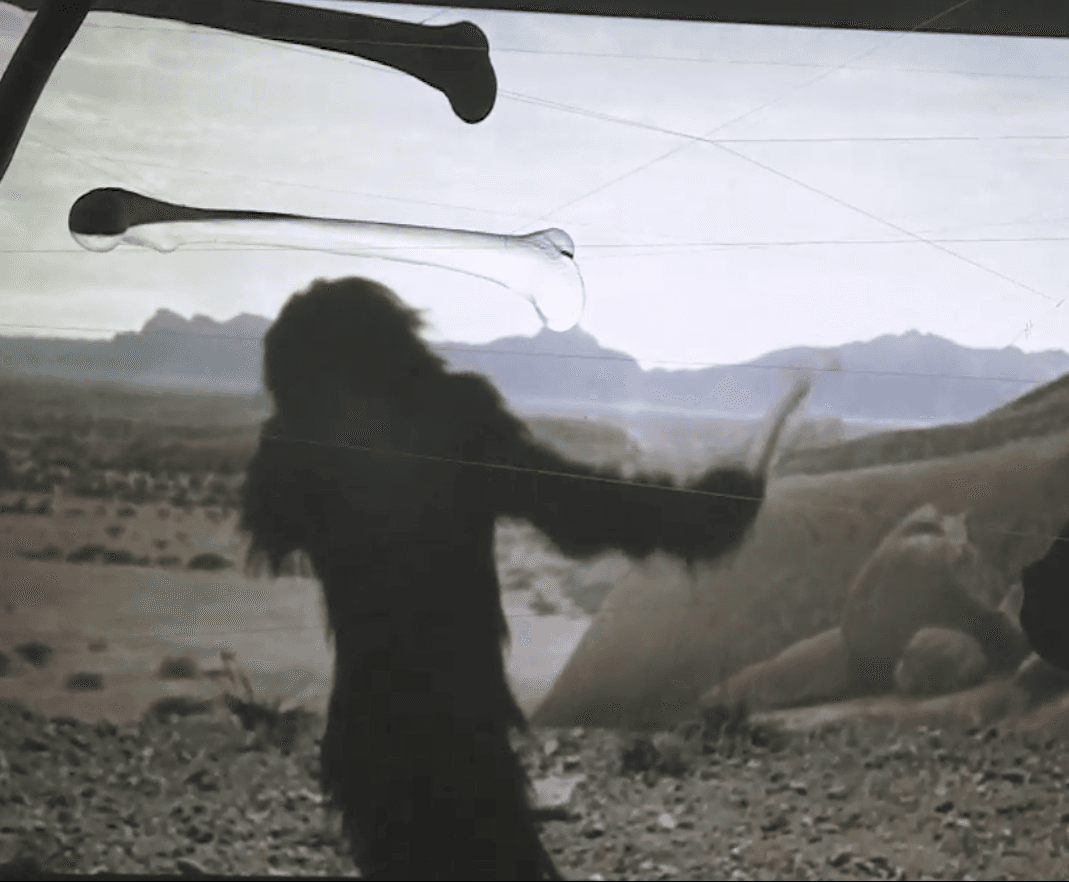
In 1935, Walter Benjamin published what remains the most cited essay in the history of art criticism. "The Work of Art in the Age of Mechanical Reproduction" argued that the invention of photography and film had destroyed what Benjamin called the aura of the artwork: its unique presence in time and space, its authenticity, the quality of irreplaceable singularity that no copy could carry. The original painting possessed something that its reproduction did not. That something was not merely physical. It was experiential. It was the sense, available only to the viewer standing before the work itself, that this object existed in a particular place, at a particular moment, bearing the accumulated weight of its history. The reproduction flattened all of this into an image.
Benjamin was writing about mechanical reproduction. We are living in the age of algorithmic reproduction, and the destruction is of a different order entirely.
The attention economy, as Columbia law professor Tim Wu documents in The Attention Merchants, is not a metaphor. It is a global industry with annual revenues exceeding five hundred billion dollars, built on a single business model: attract human attention by offering something for free, then resell that attention to advertisers. The model has not changed since Benjamin Day discovered in 1833 that he could get rich selling newspapers for a penny. What has changed is the precision and totality of the capture. Every platform, every feed, every notification, every autoplay video is an instrument in what Wu calls the "epic scramble to get inside our heads." The product is not content. The product is you. Or more precisely, the product is your attention, parceled into units and sold to the highest bidder.
The consequences for trust have been catastrophic. When every piece of information that reaches you has been selected not for its truth or its relevance but for its capacity to hold your attention long enough to serve an advertisement, the relationship between information and meaning dissolves. Context disappears. A thirty-second clip of a political speech, stripped of its setting, its audience, its preceding argument, circulates as pure affect: something to react to, not something to understand. A photograph of someone's life, filtered and curated and optimized for engagement, presents itself as reality while operating as advertisement. You cannot trust what you see because what you see has been engineered not to inform you but to hold you. The feed is not a window onto the world. It is a machine for converting your attention into revenue, and everything in it has been shaped by that purpose.
The psychologist Walter Mischel demonstrated in 1972 what he called the marshmallow test: children who could delay gratification, who could resist eating the marshmallow in front of them for the promise of two marshmallows later, went on to achieve better life outcomes. The experiment has since been substantially complicated, most notably by Watts, Duncan, and Quan, whose 2018 replication found that the children's capacity for delayed gratification was largely predicted by their socioeconomic background, not by some innate virtue of willpower. The children who waited were not more disciplined. They were less hungry. The experiment is worth invoking not because its original conclusions hold but because the cultural myth it generated, that self-control is an individual moral achievement, maps precisely onto the ideology of the attention economy. The platforms that harvest our attention profit from our inability to delay gratification, then frame that inability as a personal failing rather than an engineered outcome. The doom scroll is not a failure of willpower. It is a product designed by some of the most sophisticated behavioral engineers on earth, calibrated to exploit the dopamine response with the same precision that a slot machine exploits a gambling addiction. The negative feelings that emerge from watching other people's apparently perfect lives are not accidental. They are the engine. Envy, inadequacy, and aspiration are the emotional states that keep you scrolling, and scrolling is what generates revenue.
What has been lost in this architecture is not merely attention. It is trust. Trust requires context. It requires the ability to assess whether the person or institution presenting information to you has any relationship to the truth of what they present. When information circulates without provenance, without authorship, without accountability, and when the systems that distribute it are structurally indifferent to whether it is true or false, trust cannot survive. The attention economy has not merely distracted us. It has made us unable to believe what we see, because what we see has been manufactured to capture us rather than to inform us. We have transitioned, as a culture, from an attention economy to what might be called a trust economy: an environment in which trust has become the scarcest and most valuable resource precisely because the systems that dominated the previous era systematically destroyed it.
This is where Benjamin's concept of the aura becomes not merely relevant but urgent. What mechanical reproduction destroyed, according to Benjamin, was the artwork's authenticity: its singular, unrepeatable presence. What algorithmic reproduction destroys is something broader. It destroys the conditions under which any encounter, with an artwork, with a person, with an idea, can be trusted as authentic. The algorithm does not merely reproduce images at scale, as the printing press and the camera did. It curates, selects, optimizes, and distributes images, texts, and sounds according to criteria that have nothing to do with their truth, their beauty, or their significance, and everything to do with their capacity to generate engagement. The aura that Benjamin mourned was the aura of the original. The aura that is dying now is the aura of reality itself.
And yet art persists. This is the point that the attention economy's critics, and there are many of them, tend to miss. Art is not merely a casualty of the algorithmic age. It is its structural opposite. The encounter with a work of art that possesses what Benjamin called aura, the experience of standing in front of something that exists in one place, at one time, made by one hand, carrying the full weight of its material and conceptual history, is an encounter that the attention economy cannot replicate, cannot optimize, and cannot sell. It is, in the precise sense, inefficient. It demands sustained attention rather than extracting it. It offers no dopamine reward for scrolling past it. It cannot be reduced to a thumbnail, a clip, or a caption without losing the very quality that makes it significant. The artwork resists algorithmic reproduction not because it is old-fashioned but because its value is constituted by exactly the qualities that the algorithm cannot process: ambiguity, depth, material presence, and the demand that the viewer bring something of herself to the encounter.
This is what we mean when we say that aha! is building a trust layer for art. Provenance verified at the moment of upload. Cryptographic proof of authenticity attached to every work. A taste profile that develops from real encounters with real artworks, not from algorithmic recommendations designed to maximize engagement. An editorial section that publishes criticism, not content. A platform whose economic architecture rewards sustained participation rather than extracting attention and converting it to revenue.
The attention economy trained us to believe that information wants to be free and that value is measured in engagement. Art has always known otherwise. Value is measured in the quality of the encounter. And the encounter, if it is real, if it is sustained, if it demands something of you that a scroll cannot satisfy, is the last reliable experience of trust that the algorithmic age has left us. The aura is not dead. It has simply migrated to the last places that the algorithm cannot reach. Our work is to build platforms that protect those places rather than pave them over.
Stay informed
New essays on the economics, politics, and future of contemporary art.
Discussion
Be constructive. No hate speech, harassment, or personal attacks.
More from the editorial board
Toward a Platform Economy for Art
March 14, 2026
The Digital Körperpanzer: On the Manosphere, the Disappearance of Truth, and What Art Has Always Known
On the suit of armor that algorithms built
March 14, 2026
In Art School, We Were Told That 95% of Us Were Cannon Fodder
On the economics of creative attrition and the platform that refuses to accept it
March 14, 2026