
February 9, 2026
•Essay
The Residency Question: Where Does the Work Go?
On the gap between residency support and market access for emerging artists.
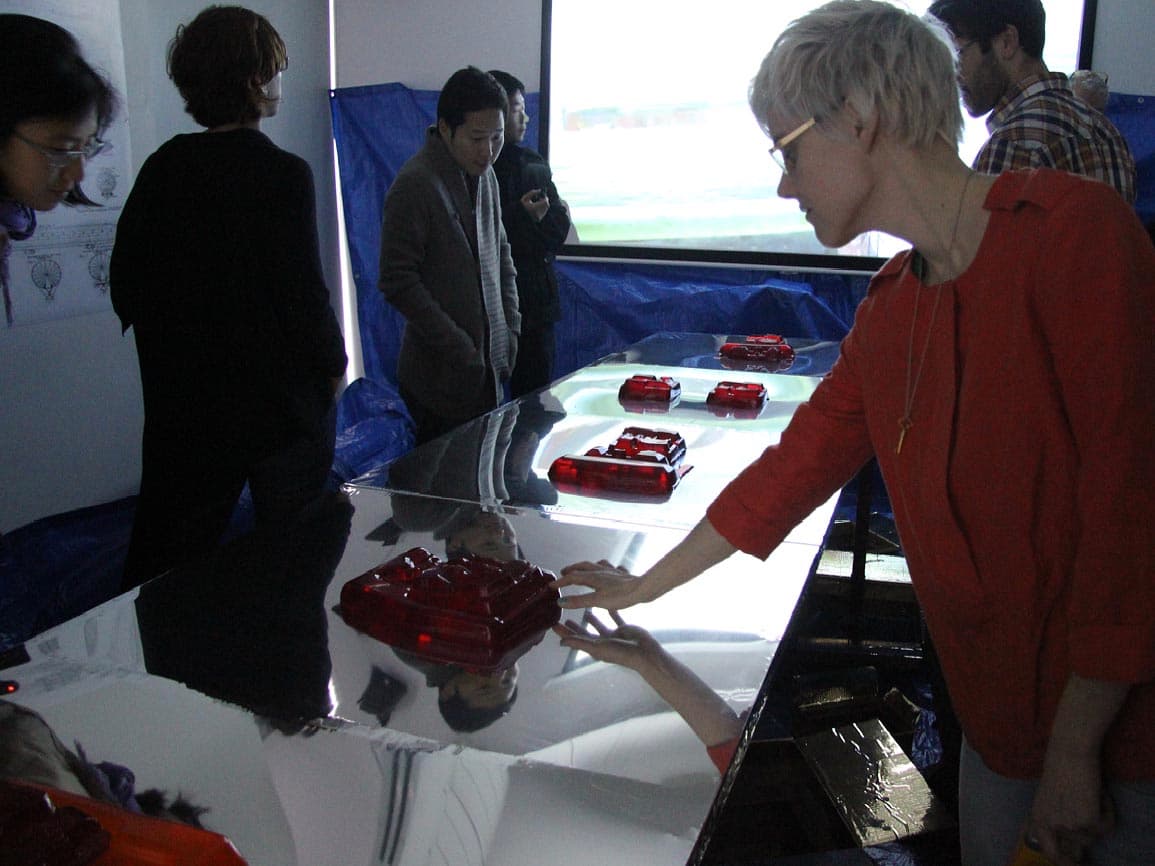
Every year, more than 1,500 artist residency programs worldwide open their doors to thousands of emerging and mid-career artists. The support is real. Funded studios, stipends, housing, the rare gift of uninterrupted time. A four-week stay at a major program represents $10,000 to $12,000 in material support. Multiply that across the field, and U.S. residencies alone channel an estimated $40 million annually in financial and in-kind assistance to working artists.
This is a remarkable infrastructure of care. It also has a blind spot.
The work that artists produce during residencies is often the most ambitious, most focused, most risk-taking work of their careers. And it enters a void the moment the residency ends. There is no standard mechanism connecting a completed fellowship to a collector. No pipeline from studio visit to sale. No system that translates institutional validation into market presence. The directories that artists rely on to find these opportunities (Res Artis, the Artist Communities Alliance, TransArtists, NYFA Source) are invaluable as discovery tools. But they stop at discovery. None of them touch the economic life of the work that follows.
This gap is not incidental. It reflects a longstanding discomfort in the art world with the proximity of commerce to creation. Residencies are understood as protected spaces, and rightly so. The Bemis Center, MacDowell, Headlands, Skowhegan: these institutions exist precisely because the market alone cannot sustain the conditions under which significant work gets made. Their funding models reflect this conviction. Philanthropy, endowments, public grants, and modest program fees cover the costs. Earned revenue from sales rarely exceeds single digits as a percentage of operating budgets.
But the artists who pass through these programs do not share the luxury of indifference to the market. Research consistently shows that the majority of working artists earn below median income, with nearly half relying on gig work and freelance labor to survive. Residencies provide temporary relief from this reality. A month or two where the day job recedes and the practice expands. The career effects are well documented: stronger networks, exhibition invitations, institutional recognition. What remains largely unmeasured is whether any of this translates into sustained economic viability for the artist.
For most, it doesn't. Not because the work isn't good enough, but because no infrastructure exists to carry it from the studio to the people who might collect it.
Consider how other parts of the art ecosystem have started to respond. Sotheby's launched an MA Industry Fellowship. Christie's sponsors month-long artist residencies culminating in London exhibitions. Corporations like Kohler and Autodesk run artist-in-residence programs that feed directly into product lines and R&D. These entities understood something that the nonprofit residency world has been slow to address: the work needs somewhere to go.
The opportunity here is not to commercialize the residency experience itself. That would undermine the very thing that makes it valuable. The opportunity is to build the bridge that connects a residency's output to the broader ecosystem of collectors, curators, and institutions who are actively looking for exactly this kind of work. New. Substantive. Produced under serious conditions. Carrying the imprimatur of a respected program.
A curated auction of a recent residency cohort's work offers something that a standard gallery exhibition cannot. The provenance is built in. The curatorial narrative writes itself. The collector isn't just buying an object. They're participating in an artist's trajectory at a pivotal moment, and they're supporting the institution that made the work possible. When the transaction generates revenue that flows back to the residency program, you create a cycle where commercial activity directly funds the next generation of fellowships.
This is what an integrated platform can do that a directory cannot. Not replace the philanthropic model, but complete the circuit that philanthropy starts.
For artists navigating the residency landscape, comparing fee structures, weighing the value of a $2,700 partial fellowship against a fully funded program, deciding whether a prestigious name on a CV justifies the time away, the question that matters most is rarely the one that gets answered. What happens to the work I make there?
That question deserves better infrastructure.
Follow aha! Editorial
New essays on artists, residencies, and the contemporary art market.
By aha! Editorial Board